An AOV is the part of a smoke control system that opens during a fire to let smoke out of the building. The letters stand for Automatic Opening Vent. It might be a roof vent, a window at the head of a stair, or a louvre panel in a wall. Whatever the shape, the job is the same: keep the escape route clear of smoke long enough for people to get out and for the fire service to get in.
If you manage a building with one fitted, the law treats you as the person responsible for keeping it working. That isn’t optional and it isn’t a once-a-year job. This guide walks through what an AOV actually is, where you’ll find them, how they trigger, and what your weekly and yearly duties look like in practice.
What an AOV Physically Is
An AOV is a vent that opens by itself when the fire alarm goes off. No one has to walk over and pull a handle. The system does it.
Physically, there are three common forms you’ll see in UK buildings:
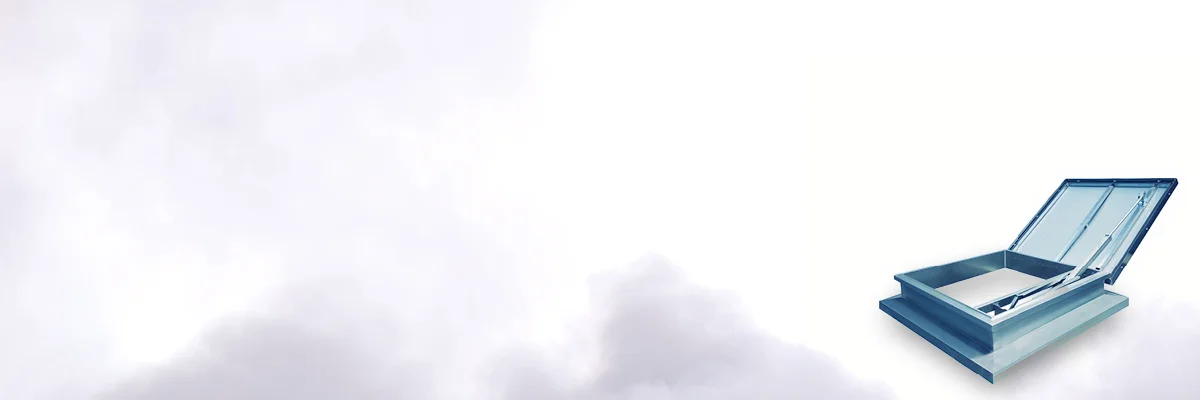
- Roof vents. A glazed or metal hatch sat on the roof at the top of a stairwell or lift shaft. When triggered, the hatch lifts open on actuators to let the smoke column escape upwards.
- AOV windows. A side-hung or top-hung window fitted at the head of a stair or on a top-floor landing. The actuator pushes the window open to a wide angle, much further than a normal vent window would go.
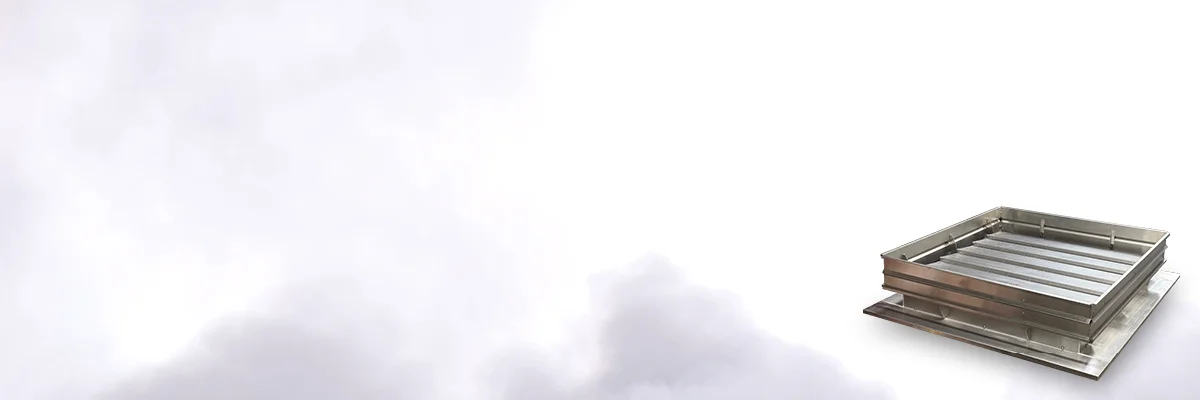
- Louvre panels. A set of horizontal blades fitted into an external wall. The blades sit closed in normal use and open in unison on a fire signal.
What they share is the engineering. Each is tested to BS EN 12101-2, the European standard for natural smoke and heat exhaust ventilators. That standard covers how reliably the vent opens (reliability classes from RE 50 to RE 1000 for the smoke fire function, declared as discrete classes), and how it behaves under wind load, snow load and low temperature. Dual-purpose vents that also act as everyday ventilation carry a separate 10,000-cycle comfort declaration under a different test regime. A vent that hasn’t been tested to BS EN 12101-2 isn’t an AOV. It’s a window.
The actuator is the bit that does the work. It’s a small electric motor (sometimes a chain drive, sometimes a spindle drive) wired back to a control panel. The panel holds the brain of the system and the battery backup that keeps things working if mains power drops out during a fire.
For more on the standards involved, our BS EN 12101 guide sets out the family in plain terms.
Where AOVs Are Typically Installed
You’ll find AOVs in three places more than anywhere else.
At the head of a stairwell. This is the classic location. A roof vent or window sits at the top of the stair. When a fire breaks out, smoke rises into the stair shaft, hits the top, and gets pushed out through the open vent. The stair stays usable as an escape route.
At the top of a lift shaft. Lift shafts act like chimneys. Hot smoke rises straight up them. A vent at the top, opened automatically, stops smoke pressure building inside the shaft and reaching landings on the upper floors.
In corridor smoke vents. Some buildings (particularly residential blocks built or refurbished under more recent guidance) use a corridor AOV. The vent is positioned in the corridor outside flats. When smoke leaks into the corridor (typically because a flat door is left open during escape, or door seals fail) the corridor smoke detector picks it up and the vent opens to clear the corridor so neighbours can still reach the stair.
In single-stair residential blocks, the AOV at the head of the stair is doing the hardest work in the building. Get that one wrong and the escape route fails. There’s more on selection in our post on choosing an AOV for a stairwell.
How AOVs Are Triggered
An AOV doesn’t open on a timer. It opens on a signal.
There are two main signal sources:
- The fire alarm panel. Most AOVs are wired into the building’s fire alarm. When the alarm detects a fire (through a smoke detector, heat detector, or manual call point), it sends a signal to the smoke control panel, which fires the actuators and opens the vent.
- A local smoke detector. Some AOVs (corridor vents in particular) have their own dedicated smoke detector mounted close by. That detector watches its own zone and triggers the vent directly without needing the main alarm to act.
Behind both sources sits the smoke control panel. The panel is what holds the cause-and-effect logic: which detector opens which vent, in what order, with what delay. It also holds the battery backup and the manual override switches the fire service uses on arrival.
When the system is healthy, the sequence is fast. Detector picks up smoke. Panel reads the signal. Actuator runs. Vent opens. The whole thing happens in seconds.
When the system isn’t healthy (a flat battery, a disconnected detector, a panel in fault) the sequence stops. That’s why testing matters.
The Difference Between an AOV and a Normal Opening Window
This catches a lot of building managers out, particularly when a leaseholder asks why a window at the top of the stair is treated differently to the one on their landing.
A normal opening window is there for ventilation. You open it when you want fresh air. It’s not wired to anything. It’s not tested for smoke control. It’s not designed to hold a position in a fire.
An AOV is none of those things. It is:
- Tested and certified to BS EN 12101-2 as a smoke and heat exhaust ventilator
- Wired into a smoke control panel with battery backup
- Driven by an actuator that’s been selected to push the vent open against wind pressure
- Set to a defined fail-safe position so it doesn’t sit in an unknown state
- Logged, tested, and serviced as part of a life safety system
The cheaper question is “can we just replace it with a standard window?” The answer is no. The fire risk assessment relies on that vent being there and working. If you swap it out, you’ve changed the design of the smoke control system, and that needs a competent engineer involved.
The serious question is “how do we know it still works?” Which leads to the part of the job that sits with you.
What You’re Responsible For as the Building Manager
Under the Regulatory Reform (Fire Safety) Order 2005, the Responsible Person for a building has a duty to keep fire safety equipment in working order. For most managed buildings that’s the building manager, the freeholder, or a managing agent acting on their behalf. The Fire Safety Act 2021 clarified that the Fire Safety Order applies to the structure, external walls and flat entrance doors of multi-occupied residential buildings, and confirmed common parts (where the AOV and smoke control system sit) fall under the Responsible Person’s duty.
The Building Safety Act 2022 added another layer on top. For residential buildings of at least 18 metres in height or with at least 7 storeys (containing at least 2 residential units), the Accountable Person has to keep a record of how the building’s safety systems are being managed (the golden thread). The smoke control system sits inside that record.
Practically, that means a maintenance schedule. The cadence drawn from BS 7346-8 (the code of practice for planning, design, installation, commissioning and maintenance of smoke control system components), with the daily check now mandated by BS 9991:2024, follows a three-tier hierarchy of Nominated Person, Competent Person and Specialist Contractor:
- Daily panel check by a nominated person. BS 9991:2024 adds a daily visual check of the smoke control panel. Green power light on, no faults showing. Log it.
- Weekly operational test by a competent person. Trigger the system and confirm the vent actually moves: opens, closes, and the panel returns to normal.
- Monthly simulated mains-failure test by a competent person. Drop the mains supply at the panel and prove the standby battery supply takes over and runs the system as designed. The competent person can be an in-house staff member with the right training, but it isn’t a job that sits with the nominated daily-check person by default.
- Quarterly visual inspection by a specialist contractor. A documented check of system condition, fault history and integrity in between annual services.
- Annual full inspection and service by a specialist smoke control contractor. A full strip-down inspection: actuators, batteries, control panel, detectors, wiring, mechanical condition of the vent, seals. The contractor issues a service certificate. You keep it.
That’s the floor, not the ceiling. Some systems carry manufacturer schedules that go further (battery replacement intervals, actuator cycle counts, panel firmware checks) and you should follow those too.
If you want the schedule broken down by frequency, we covered it in detail in Smoke Control Inspection Schedules: Daily to Annual.
What Happens If You Don’t Keep It Working
A failed AOV isn’t a technical problem. It’s a life safety failure.
If a fire happens and the vent doesn’t open, smoke fills the stair, the stair stops being an escape route, and people get hurt or killed. After the event, the fire service investigates. The Responsible Person under the Fire Safety Order can face enforcement notices, unlimited fines, and in serious cases, imprisonment. For real-world consequences after a missed test, see what happens when a smoke control system fails maintenance testing.
Even without a fire, a Fire and Rescue Service inspection can pick up a non-functioning AOV during a routine visit. Enforcement notices, prohibition notices, and remediation costs follow.
We’ve written about who actually carries that duty in Who Is Responsible for Smoke Ventilation Maintenance. Worth a read if you’ve inherited a system and aren’t sure where you sit in the chain.
The other side of this is paperwork. The golden thread under the Building Safety Act needs evidence. Daily panel check logs, weekly operational test logs, monthly mains-failure test records, annual service reports, asset register entries. If you can’t produce them, the system might as well not exist.
What a Working AOV Maintenance Routine Looks Like
You don’t need to be a smoke control engineer to run a good routine. You need a checklist, a calendar, and a competent contractor for the annual side of things.
A workable routine for a typical residential block:
- Daily eyes on the smoke control panel by a nominated person (BS 9991:2024). Green power light, no faults.
- Weekly operational test by a competent person, confirming the vent actually moves and returns to closed.
- Monthly simulated mains-failure test by a competent person to prove the standby supply takes the load.
- Quarterly visual inspection by a specialist contractor, with the report filed in the asset register.
- Annual full service by a specialist smoke control contractor with a written certificate filed in the asset register.
- Reactive call-out arrangement for any panel fault, vent fault, or detector fault flagged outside the planned tests.
What you’re aiming for is a folder (digital or paper) that shows, for any week in the year, that someone competent has eyes on the system and that any faults have been cleared. That folder is your defence if anything ever goes wrong, and it’s the evidence the regulator will ask for.
For the deeper version of this routine, see our piece on AOV system maintenance for building managers.
Further Reading
- AOV System Maintenance: What Building Managers Need to Know
- Who Is Responsible for Smoke Ventilation Maintenance
- Smoke Control Inspection Schedules: Daily to Annual
- Choosing an AOV for a Stairwell: Roof Vent vs Window
Ready to Specify or Replace an AOV?
If you’re looking at a system that needs a new vent, a like-for-like replacement, or a full upgrade, we can help. Vent Trade supplies certified AOV windows, louvres, and roof vents to UK trade, with stock held in Poole and next-working-day despatch on most lines.
Call us on 01202 725 689, email info@vent-trade.co.uk, or browse the AOV windows, AOV louvres, and AOV roof vents ranges.