AOV Louvres
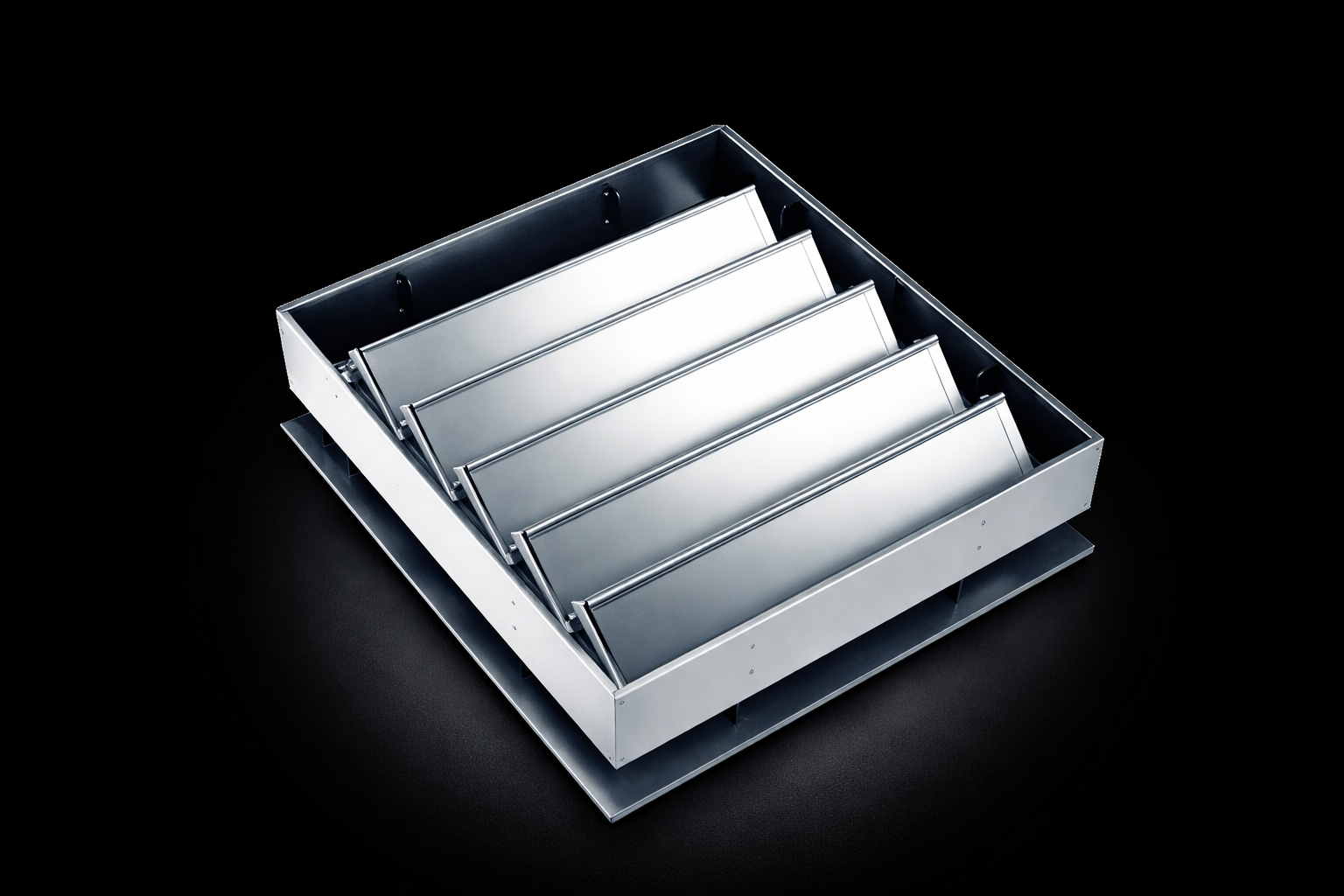
VentecAOV Blade
Compact multi-blade smoke exhaust louvre up to 1.92m² GFA. Roof or facade mount with 24v actuator. BS EN 12101-2 certified.
- up to 1.92m²
- Roof + facade
- 24v
- Poly, insulated
High-Performance AOV Louvres: Bespoke Sizing, Rapid UK Supply
Product Overview
AOV louvres are multi-blade smoke ventilation units for facade and roof applications where high certified free area is required within a compact external profile. Each blade is motorised via an integrated 24V actuator, with the assembly tested and certified to BS EN 12101-2. Vent Trade supplies the Ventec AOV Blade and AOV LAM, available in bespoke sizes up to 9.5m² GFA for stairwell facades, corridor walls, and atrium applications.
Compact multi-blade smoke exhaust louvre up to 1.92m² GFA. Roof or facade mount with 24v actuator. BS EN 12101-2 certified.
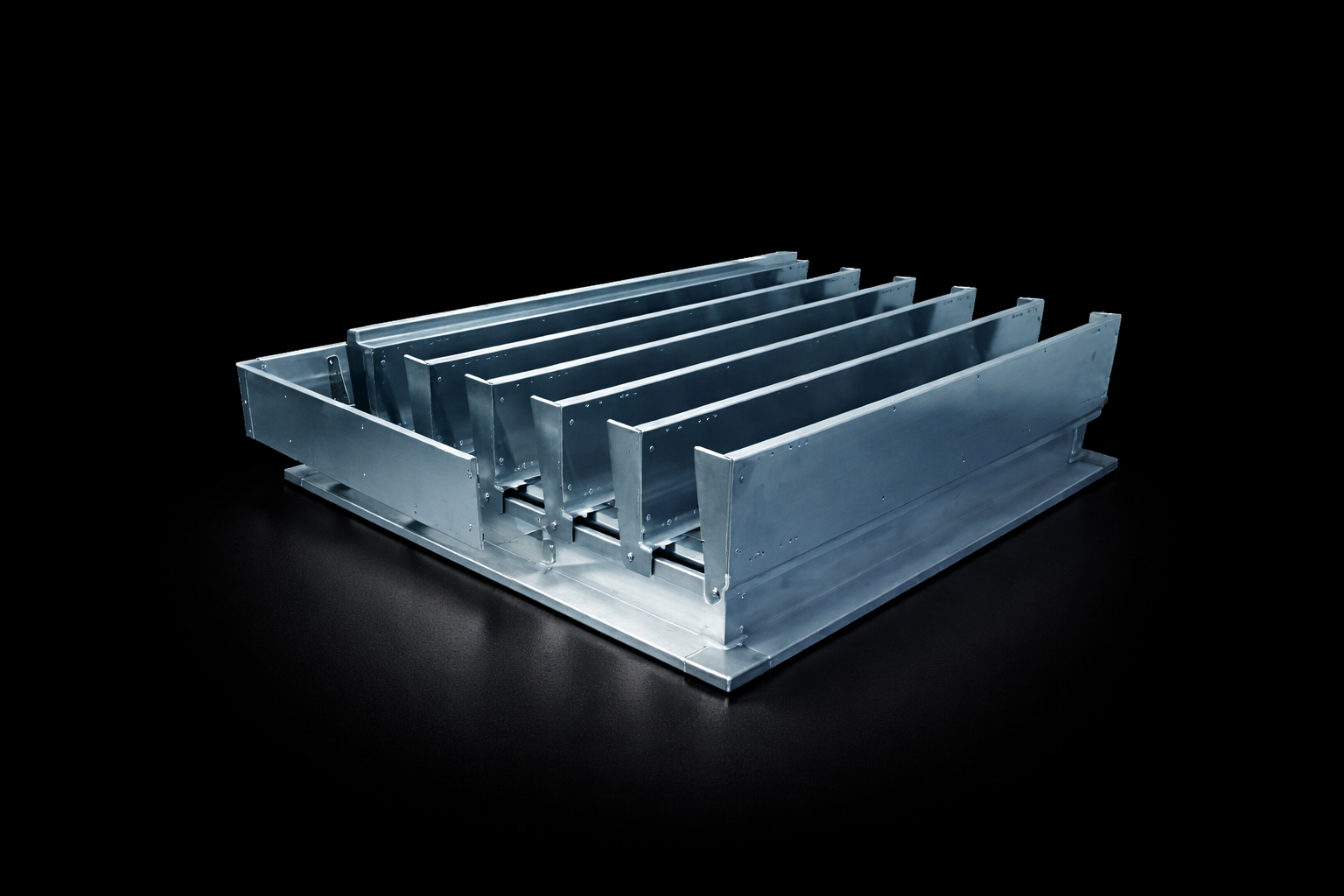
High-performance multi-blade smoke exhaust louvre up to 9.5m². Roof or facade mount with 24v actuator. BS EN 12101-2 certified.
Ventec AOV louvres certified to BS EN 12101-2 for facade and roof smoke ventilation: AOV Blade up to 1.92m² GFA and AOV LAM up to 9.5m² GFA. Bespoke sizes available with integrated 24V actuators.
For product selection or bespoke sizing, call our technical team on 01202 725 689.
An AOV louvre is a multi-blade automatic opening vent designed for smoke ventilation in facade and roof applications. It consists of multiple parallel blades mounted in a frame, each driven by an integrated 24V electric actuator. When activated by the smoke control panel, the blades rotate open simultaneously to provide a certified geometric free area through which smoke can escape the building.
AOV louvres are tested and certified to BS EN 12101-2 as complete natural smoke and heat exhaust ventilators. They offer high free area within a compact external profile, making them suitable for locations where a traditional AOV window or rooflight would not fit or where the architectural design requires a flush or low-projection facade element.
AOV louvres are commonly specified for stairwell facades, corridor walls, atria, and light wells in multi-storey residential and commercial buildings where the fire strategy requires automatic smoke extract ventilation.
Specifying the correct AOV louvre requires matching the product’s certified geometric free area to the requirement in the fire strategy or ventilation design. The critical parameter is GFA: the unobstructed area through which smoke can pass when the louvre is fully open: not the overall external dimensions of the louvre frame.
Always confirm the required free area from the fire engineering documentation before selecting a product, and verify that the manufacturer’s certified GFA at the relevant test pressure matches the design requirement. The Ventec AOV Blade provides up to 1.92 square metres of certified GFA and suits applications requiring compact facade-mounted smoke extract. The Ventec AOV LAM offers up to 9.5 square metres of certified GFA for larger free area requirements in atria and open-plan spaces.
Both products are available in bespoke sizes to match the structural opening. Confirm the mounting orientation, actuator voltage compatibility, and connection details with the smoke control panel before ordering.
AOV louvres used in smoke ventilation systems in the UK must be tested and certified to BS EN 12101-2, the European standard for natural smoke and heat exhaust ventilators. This certification covers the complete assembly (louvre blades, frame, actuator, and mounting arrangement) tested as a unit to verify certified geometric free area, aerodynamic free area, thermal classification, reliability, and operational performance under fire conditions.
The smoke control panel powering the louvre must comply with BS EN 12101-10 for power supply and control equipment. The overall installation must satisfy the fire safety requirements of Approved Document B of the Building Regulations.
When specifying, always confirm that the product’s BS EN 12101-2 certificate covers the specific size, blade configuration, and mounting orientation required by the project: certification is not automatically transferable between sizes or configurations. Ventec AOV louvres are tested and certified to BS EN 12101-2 with documentation available for building control submission.
AOV louvres are installed on building facades, walls, and roofs where the smoke ventilation design requires automatic smoke extract through a compact, weather-resistant opening. Common locations include:
Louvres are often specified where a traditional openable window AOV would project too far from the facade, where weather protection is needed at the vent opening, or where the architectural design requires a flush facade profile. Roof-mounted louvres are used where a rooflight-style AOV is not practical due to structural constraints or maintenance access requirements.
AOV louvres can serve dual-purpose roles, providing natural ventilation in normal conditions and switching to smoke extract mode on fire alarm activation, depending on the control system configuration.
AOV louvres require regular inspection and functional testing as part of the building’s smoke ventilation maintenance regime. BS 7346-8 recommends weekly visual inspections to check for blade obstructions, physical damage, debris accumulation, or signs of corrosion, and monthly functional tests including full open and close cycling of all blades.
The actuator mechanism and blade linkages should be inspected for wear, looseness, or binding during each test cycle. On externally mounted units, weathering effects including corrosion of blade pivot points and accumulation of leaves or debris between blades should be monitored and addressed promptly.
A comprehensive annual service by a competent engineer is recommended, covering actuator force verification, blade seal inspection, electrical connection testing, and confirmation of certified free area performance. Buildings in exposed or coastal locations may require more frequent inspections due to accelerated corrosion. All maintenance activities should be recorded in the building’s fire safety management log for regulatory compliance.