Fans
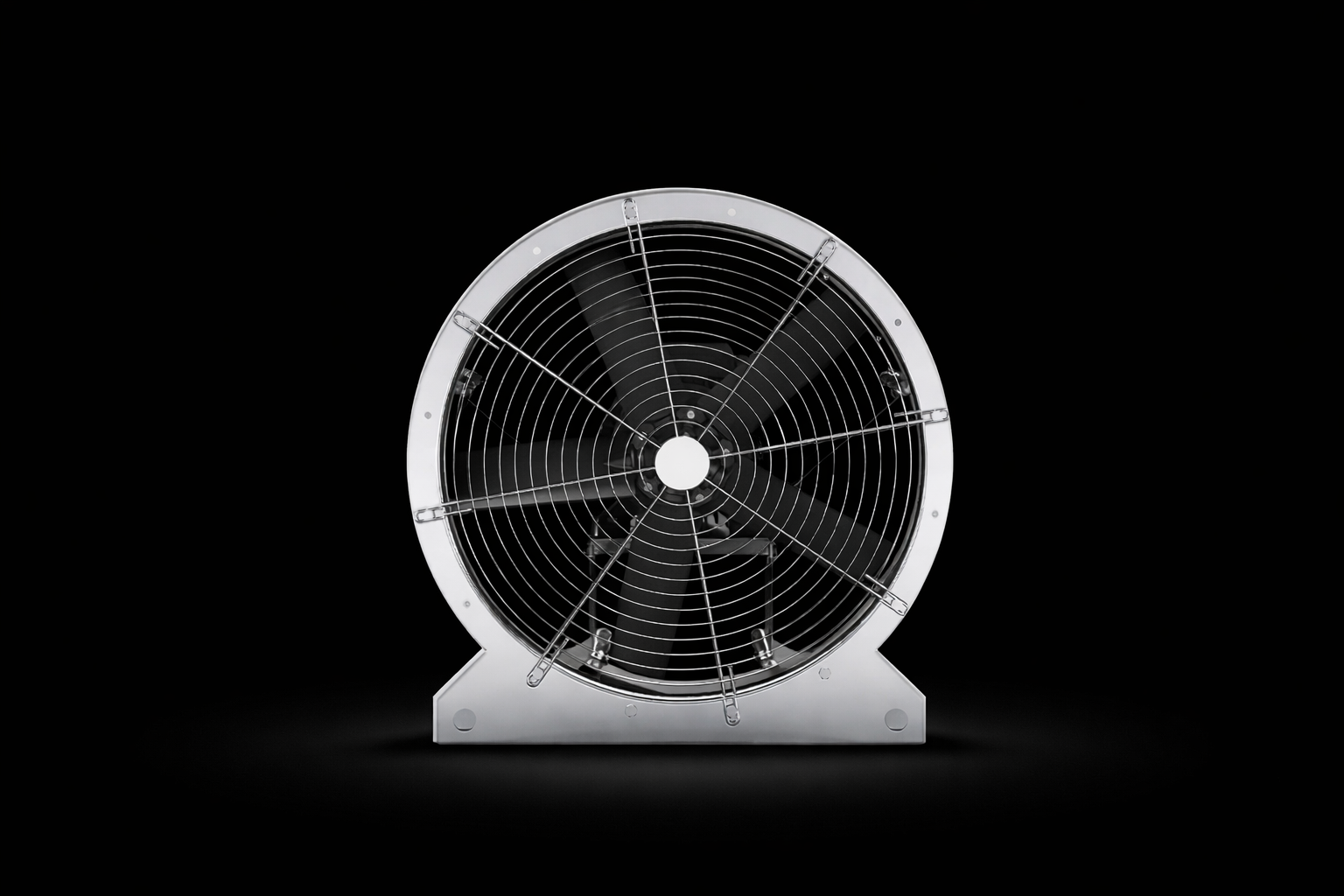
VentecAXF Extract Fans
BS EN 12101-3 certified axial extract fans for smoke shaft and car park ventilation. Bespoke sizes with duty-standby pairs. Optional integrated silencers.
- Duty / standby
- BS EN 12101-3
- Bespoke sizes
Smoke Extract & Environmental Fans Certified to EN 12101-3
Product Overview
Mechanical ventilation fans for smoke extract, environmental ventilation, and building services applications. The Ventec AXF is a BS EN 12101-3 certified axial extract fan for smoke shaft and corridor extract duties, available in bespoke sizes with duty-standby pairs. The Ventec EF 315 is a compact IP55-rated centrifugal cabinet fan for plant rooms and equipment enclosures where space is limited and noise levels must be controlled.
BS EN 12101-3 certified axial extract fans for smoke shaft and car park ventilation. Bespoke sizes with duty-standby pairs. Optional integrated silencers.
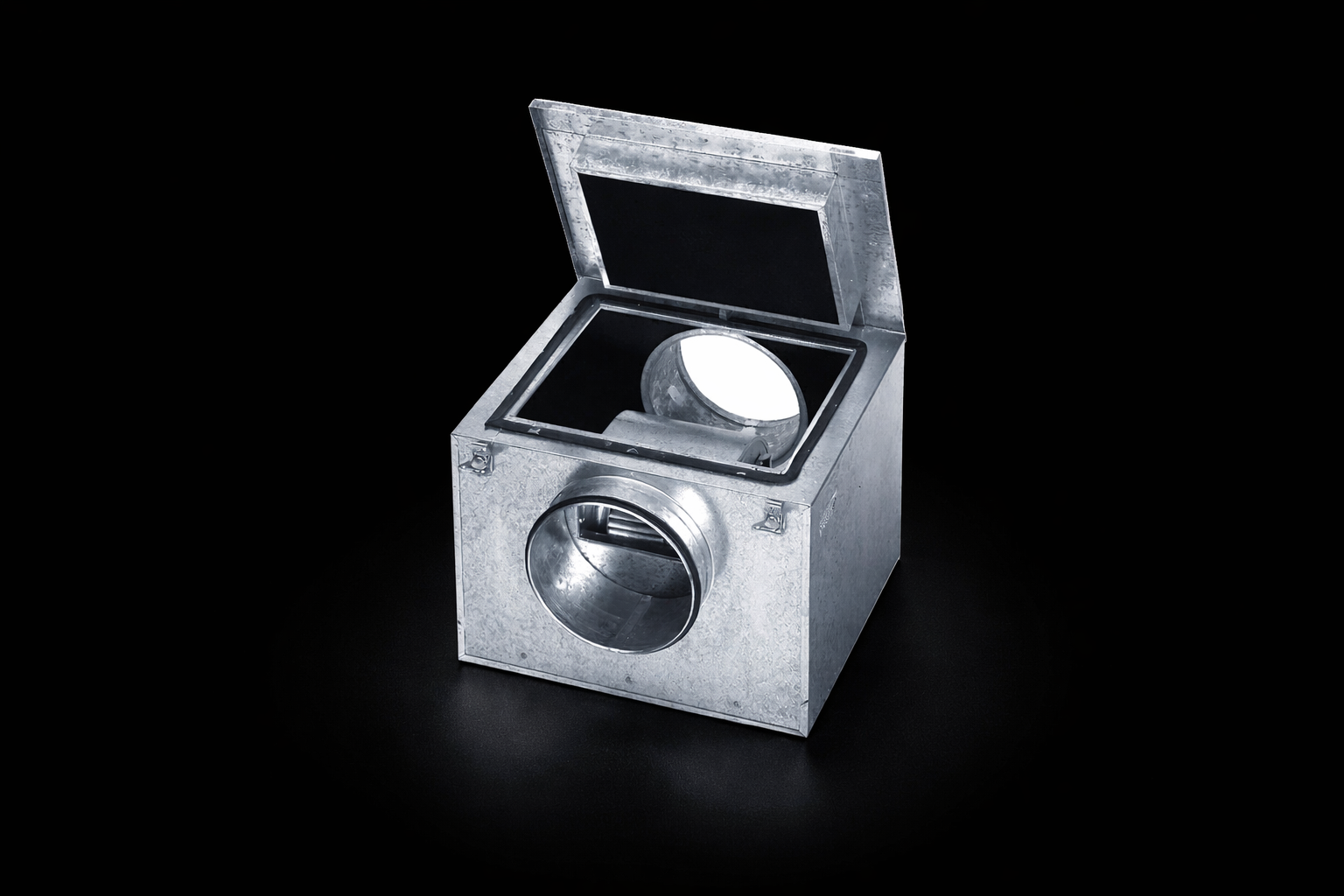
Compact 315mm cabinet fan with acoustic insulation and direct-drive centrifugal motor. Heavy-gauge galvanised steel with 50mm fireproof insulation. IP55 rated.
Ventec AXF smoke extract fans certified to BS EN 12101-3, plus EF 315 environmental cabinet fans. Bespoke sizing available with duty-standby configurations and optional silencers.
For product selection and performance data, call our technical team on 01202 725 689.
A smoke extract fan is a mechanical ventilation device designed to remove smoke from a building during a fire by drawing contaminated air through a duct or shaft and exhausting it to the outside. Unlike standard ventilation fans, smoke extract fans are engineered and tested to operate at elevated temperatures for extended periods (typically 300 degrees Celsius for two hours), ensuring they continue to function throughout the critical evacuation and firefighting period.
Smoke extract fans are a key component of mechanical smoke ventilation systems used in multi-storey residential buildings, commercial premises, and industrial facilities where natural smoke ventilation alone is insufficient. They are installed at the top of smoke shafts, in dedicated extract ductwork, or as part of lobby and corridor pressurisation systems.
In the UK, smoke extract fans must be certified to BS EN 12101-3 for use in regulated smoke ventilation installations, with performance data verified at the operating temperature specified in the fire strategy.
Selecting the correct smoke extract fan requires matching the fan performance to the duty specified in the mechanical ventilation design. The key parameters are volume flow rate in cubic metres per second, static pressure in pascals, motor power in kilowatts, operating temperature classification, and IP rating.
The volume flow rate and static pressure must meet the values specified in the fire engineering design for the smoke shaft or ductwork system. The temperature classification must match the fire strategy: common ratings are F300 for 300 degrees Celsius and F400 for 400 degrees Celsius, with durations of 60 or 120 minutes. For critical applications, duty-standby pairs provide redundancy in case of single fan failure.
Consider noise levels for installations in or near occupied spaces: silencers can be integrated where required. The Ventec AXF range is available in bespoke sizes to match shaft or duct openings, with optional integrated silencers and duty-standby configurations.
Smoke extract fans used in UK smoke ventilation systems must be tested and certified to BS EN 12101-3, the European standard for powered smoke and heat exhaust ventilators. This standard covers fan performance testing at elevated temperatures, verifying that the fan delivers the rated airflow and pressure at the specified operating temperature for the required duration.
Performance is classified by temperature and time: for example, F300/120 indicates reliable operation at 300 degrees Celsius for 120 minutes. The fan’s certified performance data must match the values specified in the mechanical ventilation design. The smoke control panel managing the fan must comply with BS EN 12101-10.
The overall installation must satisfy the requirements of Approved Document B of the Building Regulations. Environmental cabinet fans used for non-smoke-control ventilation do not require BS EN 12101-3 certification but should comply with relevant electrical safety standards and IP rating requirements for the installation environment.
Smoke extract fans are installed at the exhaust point of mechanical smoke ventilation systems, typically at the top of smoke shafts in multi-storey residential buildings, at the termination of smoke extract ductwork in commercial premises, and in dedicated plant rooms serving lobby and corridor ventilation systems.
In residential buildings using a smoke shaft strategy, the extract fan is mounted at roof level above the shaft, drawing smoke upward through the shaft from the fire floor via open smoke dampers. In commercial and industrial buildings, extract fans may be installed in plant rooms with ductwork connections to multiple zones.
Car park applications use axial extract fans at perimeter or shaft positions to remove smoke pushed towards them by jet impulse fans distributed across the car park. Environmental cabinet fans for non-smoke-control duties are installed in plant rooms, electrical enclosures, and equipment cabinets where localised ventilation is required to manage heat and air quality.
Smoke extract fans are life-safety devices and require scheduled maintenance to ensure reliable operation during a fire emergency. BS 7346-8 recommends monthly visual inspections to check for unusual noise, vibration, or visible damage, and quarterly functional tests including operation at full rated speed in smoke extract mode.
The motor, bearings, and drive components should be inspected for wear, and electrical connections checked for integrity and signs of overheating. Impeller blades should be inspected for accumulation of dust or deposits that could affect balance and performance. Duty-standby configurations should be tested to confirm automatic changeover operates correctly.
A comprehensive annual service by a competent engineer is recommended, covering motor insulation resistance testing, vibration analysis, airflow and pressure measurement to verify continued compliance with the design duty, and control system interface testing. Fan performance should be compared against the original commissioning data to identify any degradation. All maintenance and test results must be documented in the building’s fire safety management records.