For atrium and mixed-use building projects
Stop atrium smoke reaching escape routes
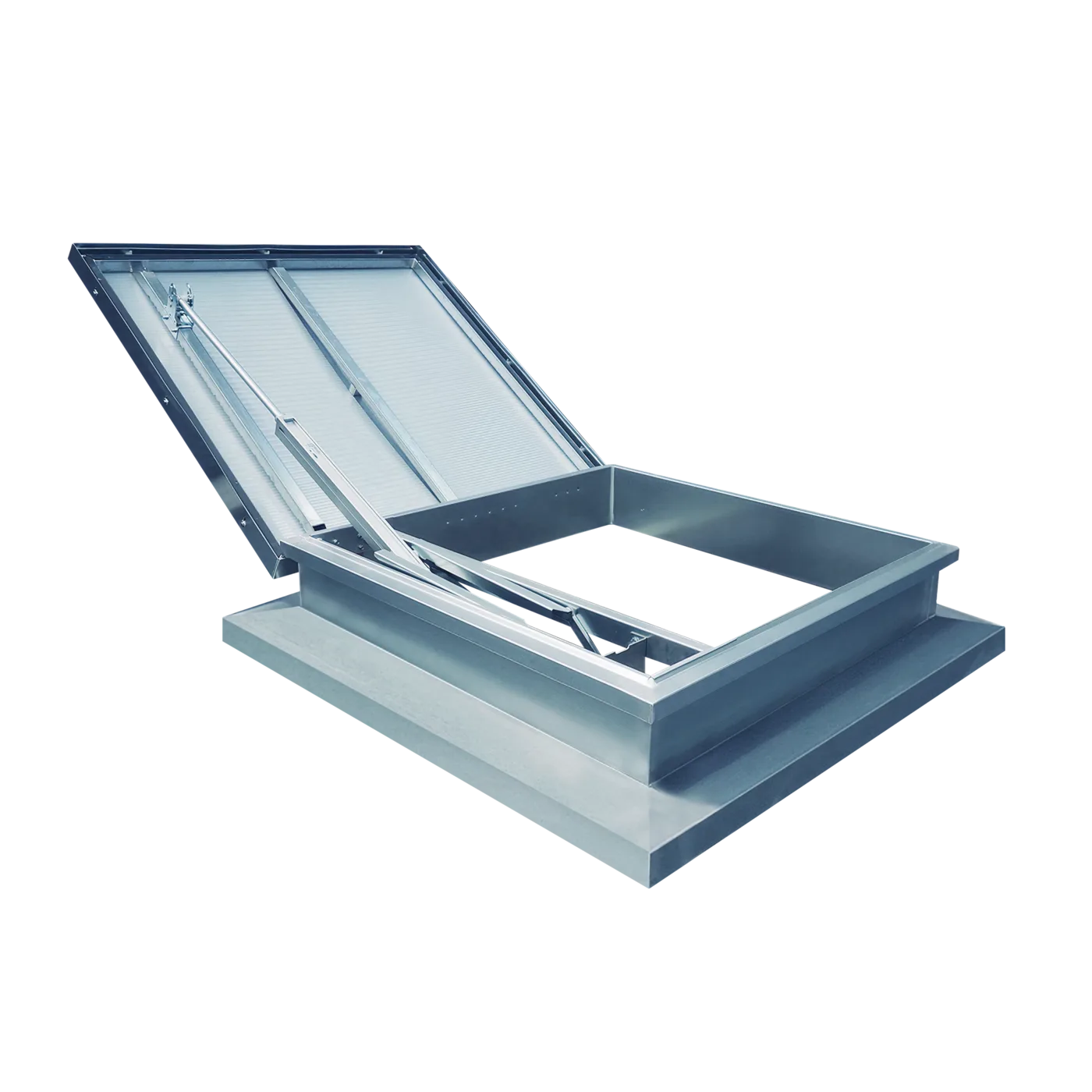
An atrium takes out the floors that would normally hold smoke back. We supply the roof vents, extract fans, curtains, dampers and controls that keep the upper storeys clear.
Before you specify
Seven questions you ask. Seven straight answers from us.
The questions contractors, M&E subcontractors and fire engineers put to us before pricing an atrium smoke system.
You ask
Which standards does an atrium smoke system have to meet?
Our answer
Approved Document B sets the objective, BS 7346-4 gives the design method for reservoir sizing and extract rates, and the hardware certifies to BS EN 12101: -1 for smoke curtains, -2 for natural roof vents, -3 for powered extract fans.
You ask
Can you supply the whole atrium package or just the roof vents?
Our answer
YesRoof AOVs, powered smoke extract and car-park fans, BS EN 12101-1 smoke curtains, low-level inlet louvres and the O Range control panel all come from one supplier, so the cause and effect gets written once.
You ask
Do we need low-level make-up air, and can you provide it?
Our answer
YesExtract only pulls if replacement air comes in low, so inlet free area has to match the smoke strategy, and we supply the low-level louvres, actuated doors or dedicated inlet vents that feed the reservoir.
You ask
Will you help size the reservoirs and extract rate?
Our answer
YesWe work from the fire engineer's smoke strategy and any CFD to size reservoir depth, vent free area and fan volumes to BS 7346-4, then supply kit that hits those figures. The fire strategy stays the lead document.
You ask
Natural roof vents or mechanical extract for the atrium?
Our answer
It depends on roof height, reservoir depth and the design smoke layer. Tall atria with a deep clear layer often run on natural BS EN 12101-2 vents, deeper or enclosed schemes need BS EN 12101-3 fans, and we size and supply both.
You ask
What are your lead times on atrium kit?
Our answer
Standard AOVs, actuators, fans and O Range panels sit in over £1m of stock for next-day despatch. Large bespoke roof vents, long smoke curtains and made-to-order louvres carry a manufacturing lead time we confirm at order.
You ask
Who commissions it and ties it to the fire alarm?
Our answer
We do. Our engineers commission the vents, fans and curtains, prove the cause and effect against the fire alarm signal, and document that curtains drop, reservoirs form and extract runs in the right order and timing.
The problem
What an atrium does to smoke
An atrium connects several storeys through one open void. Remove that vertical compartmentation and a fire on one level can spill smoke upward, straight across escape routes people need to reach the ground.
Lost compartmentation
The atrium removes the floor slabs that separate storeys. A fire on one level pushes smoke into the shared void with nothing to hold it back.
Smoke on the upper floors
Smoke rises through the void and reaches escape routes several storeys above the fire. Occupants up there still need a clear way out.
Make-up air starved
Extract only works if replacement air gets in at low level. Undersized inlets stall the flow and the smoke sits there.
No defined reservoir
Without a smoke reservoir and curtains under the roof, smoke spreads sideways instead of collecting where the vents can clear it.
Wrong extract strategy
Compartment extract, balcony extract and atria extract each suit different layouts. Pick the wrong one and you leave a gap in the design.
Heat and clearance
Hot smoke loads the structure, and the building still needs clearing once the fire's out. The system has to cover both.
The ventilation approach
How atrium smoke control works
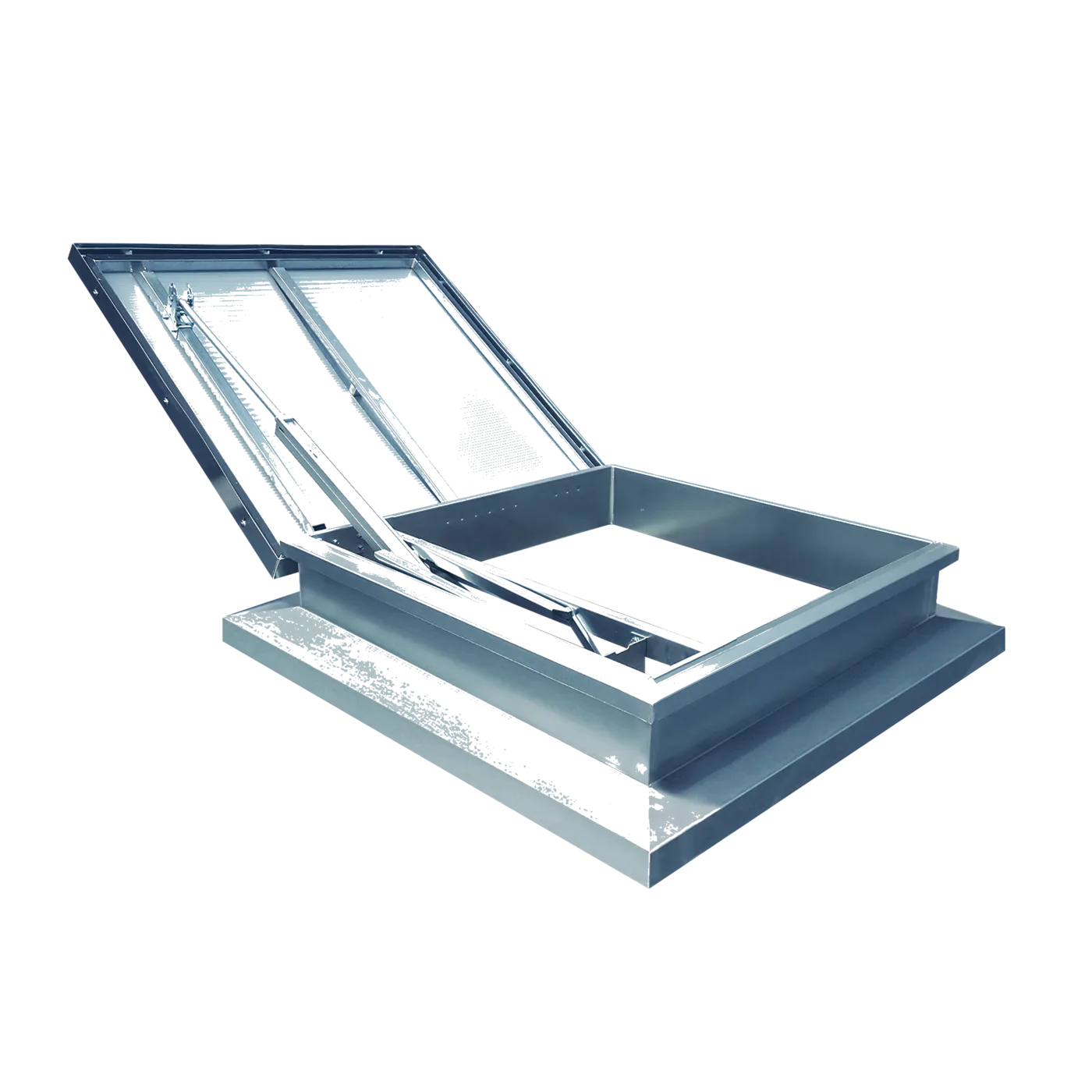
Atria extract is the common approach for tall voids. Smoke spills into the atrium, collects in a reservoir under the roof and is drawn out by AOV vents or powered fans. Low-level make-up air feeds the system so it keeps pulling. Everything runs to Approved Document B, BS 7346 and the BS EN 12101 product standards.
Atria roof extract
Smoke spills into the void and is extracted under the roof by AOV vents or powered fans. The most common approach for tall atria.
Low-level make-up air
Inlet louvres or vents at the base feed replacement air so the extract can pull smoke clear rather than stall.
Reservoirs and curtains
Smoke curtains and reservoir screens channel smoke into a defined zone under the roof where the vents can clear it.
Controls and dampers
O Range panels, window actuators and smoke dampers drive the vents and hold the fire sequence together.
Who you are buying from
Since 1988. Stock on the shelf. Engineers on the phone.

Next step
Get the atrium spec right
Send us the layout, the void geometry and the fire strategy. We'll help you match the vents, fans, curtains, dampers and controls to Approved Document B, BS 7346 and BS EN 12101, then get the products to site. Talk to the smoke ventilation team or request a spec pack.