Smoke control is what keeps people alive during a fire. Smoke clearance is what makes the building usable again afterwards. Two different jobs, two different sets of expectations, and two different points in the timeline of a fire event.
The equipment can look identical. A roof vent that opens on the fire alarm to keep a stair tenable is the same physical object as a roof vent that opens after the fire is out to clear residual smoke. Same actuator, same louvre, same opening area. The function depends entirely on when it opens, why it opens, and who’s in charge of telling it to open.
This article sorts out the terminology and explains where the confusion comes from, with a practical test for telling the difference on site.
What Smoke Control Actually Is
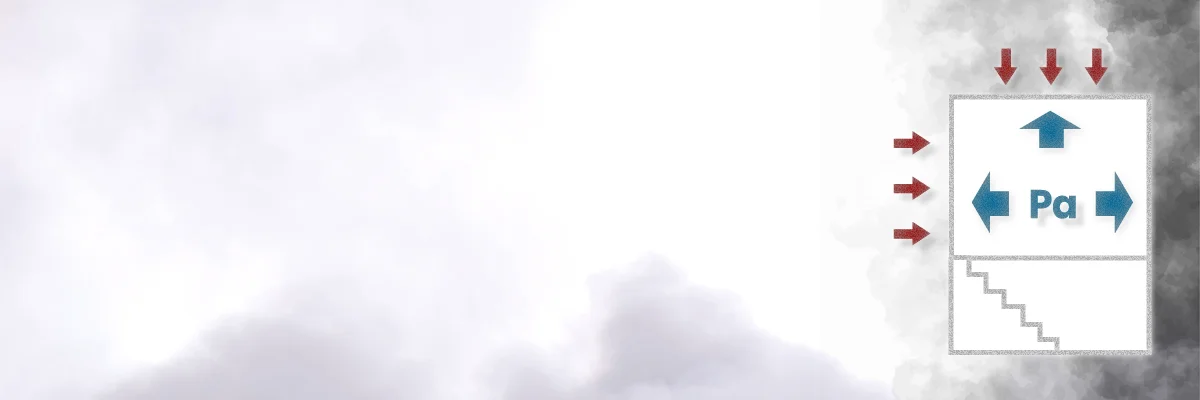
Smoke control is a life safety function. The job is to keep escape routes tenable while occupants get out and while the fire and rescue service get in. That is the entire purpose.
The system runs automatically. A fire alarm signal from a detector or sounder circuit activates the smoke control panel. The panel runs its cause and effect logic. Vents open, fans run, dampers move to their fire positions, lobby pressurisation kicks in if specified. None of that requires a human decision. By the time anyone is looking at the panel, the system has already done its job for the first few minutes of the fire.
The components are certified. Natural vents to BS EN 12101-2. Powered smoke and heat control ventilators (fans) to BS EN 12101-3. Pressure differential systems to BS EN 12101-6 (kits and components) and BS EN 12101-13 (design, installation, testing and maintenance). Dampers to BS EN 12101-8. Power supplies to BS EN 12101-10. Control equipment to BS ISO 21927-9. Each part of the system has a test report, a declaration of performance, and a place in the cause and effect matrix.
The standards apply because life is at stake. If a smoke control system fails during a fire, people in the escape route die. That is not a theoretical risk. It is the reason BS 9991:2024, BS 9999, and Approved Document B exist in the form they do.
What Smoke Clearance Actually Is
Smoke clearance is what happens after the fire. The flames are out. The occupants are evacuated or accounted for. The fire and rescue service have done their initial work. Now the building is full of cold smoke, soot, and combustion products that nobody wants to breathe and nobody wants soaking into surfaces any longer than necessary.
Smoke clearance ventilates the building back to an occupiable state. It is not life safety. It is a post-incident operational function. The job is housekeeping with a serious purpose, not active rescue.
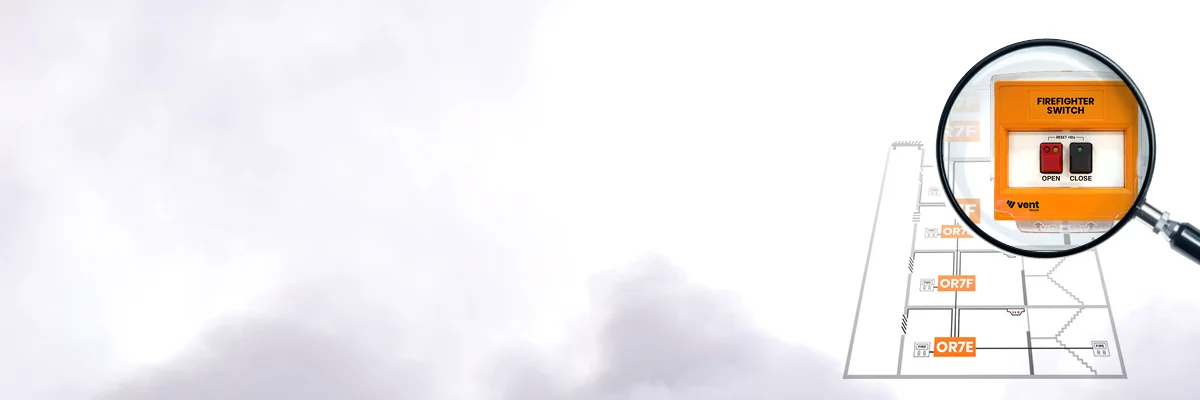
The activation is manual. Someone, usually a fire officer or a building manager working under fire service direction, decides the fire is out and the building can be ventilated. They press a button, turn a key switch, or operate a manual override. Vents open. Fans run on clearance mode. Smoke leaves the building. The process takes minutes or hours depending on the area involved.
The standards are looser. There is no BS EN 12101 product family for smoke clearance specifically. The functionality is usually written into the design and described in the operation and maintenance manual, but it is not certified as a life safety function in its own right. The hardware that does the work might well be certified, because the same vents are doing both jobs, but the clearance mode itself is not under the same regulatory weight.
Where the Confusion Comes From
The two functions get mixed up for a handful of reasons, and every one of them is avoidable.
Same equipment, different jobs. A natural smoke vent on a stair head can be the active smoke control vent on the upper floor and the manual clearance vent for the lower floors. One product, two roles. If the specification only mentions one of those roles, the other gets forgotten in maintenance, training, and handover.
Sales literature blurs the line. Some product datasheets describe an AOV as suitable for smoke ventilation and smoke clearance in the same sentence, without distinguishing the certification basis for each. Buyers read the headline and assume the product is approved for both functions equally. The certification covers smoke control. The clearance is a use case, not a certified function.
Building managers ask the wrong question. We see this constantly on site. A facilities manager asks the fire risk assessor whether the system can clear smoke after a fire. The assessor says yes. The manager assumes that means the system is certified for that purpose and signed off accordingly. What the assessor actually means is that the equipment can be operated in clearance mode if someone presses the switch. Different answer.
Maintenance schedules drift. Smoke control gets tested rigorously because BS 7346-8 and the SCA maintenance guidance say it must. Smoke clearance gets tested rarely or not at all in practice, even though BS 7346-8 brings it within the same maintenance code of practice as smoke control. The inspection emphasis on site usually lands on the life safety function, and clearance mode drifts.
Terminology in casual use. People say “the smoke vent” when they could mean either function. The vent does not know which job you are asking it to do. The control mode does. If a specification, an O&M manual, or a maintenance certificate uses the word “smoke vent” without saying control or clearance, that is a yellow flag.
How to Tell the Difference
Here is the practical checklist we use when looking at a system or a document to work out which function is in play.
- Look at the activation source. Fire alarm signal feeding the smoke control panel equals smoke control. Manual switch, fire service key switch, or BMS command equals smoke clearance.
- Check the certification. If the component datasheet cites BS EN 12101-2, BS EN 12101-3, BS EN 12101-6, BS EN 12101-8, or BS EN 12101-10, that part of the system is built for smoke control. Clearance does not have its own product family.
- Read the cause and effect matrix. Smoke control sequences are documented row by row. Smoke clearance is usually a separate override mode, sometimes a single line at the bottom.
- Check the response time requirement. Smoke control activation must complete within seconds of the fire signal. Smoke clearance does not have a specified response time because the urgency is gone.
- Identify who is in charge. Smoke control runs without human input. Smoke clearance runs because a named person has decided to start it.
- Look at the maintenance record. Smoke control should be tested at the intervals set out in BS 7346-8 and the SCA guidance. If only the clearance mode has been operated in recent visits, the certificate may not actually cover the life safety function.
If the system or the document fails any of these checks, you have a question to ask before you sign anything off.
Why This Matters for Higher-Risk Buildings
The Building Safety Act 2022 section 65 brought higher-risk residential buildings (at least 18 metres or 7 storeys, containing at least 2 residential units) into a regulatory regime that demands traceable, documented evidence of how the fire safety strategy works. The golden thread requirement means the design intent, certification, commissioning, and ongoing performance of the smoke control system all have to be recorded and kept current.
That regime focuses on the life safety function. Smoke control. If your golden thread documents an AOV as a “smoke ventilation system” without distinguishing the smoke control function from any clearance role the equipment might also perform, the Principal Accountable Person has an evidence gap. The certification covers smoke control. The clearance function, if present, needs to be described separately so that the maintenance regime can address it correctly.
This is the kind of detail that turns into a problem only when somebody looks closely. A regulator looks closely. A fire engineer reviewing the strategy after an incident looks closely. The Building Safety Regulator looks closely. Vague terminology in your documentation does not survive that scrutiny.
What to Do About It
Three small habits prevent most of the confusion in practice.
First, write the function next to the equipment. When you list an AOV in a specification, an O&M manual, or a maintenance certificate, say whether it provides smoke control, smoke clearance, or both. Two words on each line. That is all it takes.
Second, keep the maintenance regimes separate. Smoke control gets the full BS 7346-8 and SCA guidance treatment. Smoke clearance gets a documented operational check, even if the schedule is lighter. Do not let one substitute for the other.
Third, train building staff on the difference. The person responsible for activating clearance mode after an incident needs to know what they’re doing, when they’re allowed to do it, and what the system won’t do automatically. That’s a five-minute briefing, not a course, but it has to happen.
If you want to go deeper on the components, the smoke ventilation integration with building systems post breaks down how the parts work together. The BS EN 12101 guide sets out the certification framework. The glossary covers the technical terms in plain language.